Both sweepstakes casinos and state lotteries promise prizes and entertainment, but they operate under completely different models. The confusion between them is understandable. Both involve chance, both can result in real prizes, and both are accessible to millions of Americans. Yet the mechanics, legal foundations, and player experiences could hardly be more distinct.
State lotteries run under explicit government authorization with decades of regulatory infrastructure behind them. Sweepstakes casinos emerged more recently, operating through promotional sweepstakes laws that were originally designed for mail-in contests and cereal box giveaways. This model comparison matters whether you are a casual player trying to decide where to spend your entertainment dollars, or someone curious about why two seemingly similar activities face such different regulatory treatment across the country.
Sweepstakes vs Lottery — More on this topic at social casino sweepstakes.
Structural Differences Between the Two Models
State lotteries function on a straightforward transactional model. You pay money, you receive a ticket, the ticket has a chance to win. The consideration, chance, and prize elements of gambling are openly present, and that is precisely why lotteries require specific constitutional or statutory authorization in each state where they operate. The state itself typically runs the lottery or contracts with a private operator under strict oversight.
Sweepstakes casinos work differently because they have to. The model comparison at the structural level reveals an industry built around legal workarounds. These platforms use a dual-currency system where players purchase Gold Coins, a virtual currency with no redemption value, and receive Sweeps Coins as a bonus with each purchase. Only the Sweeps Coins can be exchanged for prizes. The purchase is framed as buying entertainment tokens, with the redeemable currency coming as a promotional add-on rather than the product itself.
This structure exists because legitimate sweepstakes must remove the consideration element. Anyone can theoretically enter without paying through Alternative Methods of Entry like mail-in requests for free coins. State lotteries have no such requirement. You cannot mail the lottery commission and request a free Powerball ticket because the lottery is legally authorized to require payment. Sweepstakes casinos are not explicitly authorized as gambling, so they construct their model to avoid the legal definition entirely. The result is two activities that feel similar to players but rest on entirely different foundations.
Legal Framework Comparison
Every state lottery in America operates under explicit legal authority. Most states amended their constitutions or passed specific enabling legislation to permit lottery operations. These laws define exactly how lottery proceeds must be allocated, often earmarking funds for education, senior services, or environmental programs. The regulatory framework includes gaming commissions with enforcement powers, regular audits, and detailed consumer protection requirements.
Sweepstakes casinos claim authorization under a patchwork of promotional sweepstakes laws and commercial free speech protections. They argue that since no purchase is necessary to enter, the activity does not constitute gambling under traditional legal definitions. This interpretation has proven increasingly controversial. According to KPMG analysis, sweepstakes casinos currently operate in more than 35 states, while fully regulated iGaming is only legal in 7 states. This disparity exists because sweepstakes platforms do not seek state gambling licenses, instead operating under the premise that they are not gambling operations at all.
The legal stability differs dramatically. State lotteries face minimal existential legal threats because their authorization is explicit and constitutionally grounded. Sweepstakes casinos face ongoing challenges. State attorneys general have sent cease-and-desist letters to operators, class action lawsuits have resulted in settlements totaling hundreds of millions of dollars, and several states have moved to explicitly ban the activity. California passed AB 831 in 2025 to close the sweepstakes loophole entirely. The legal foundation of lotteries is bedrock; the legal foundation of sweepstakes casinos is contested sand.
Gameplay Differences
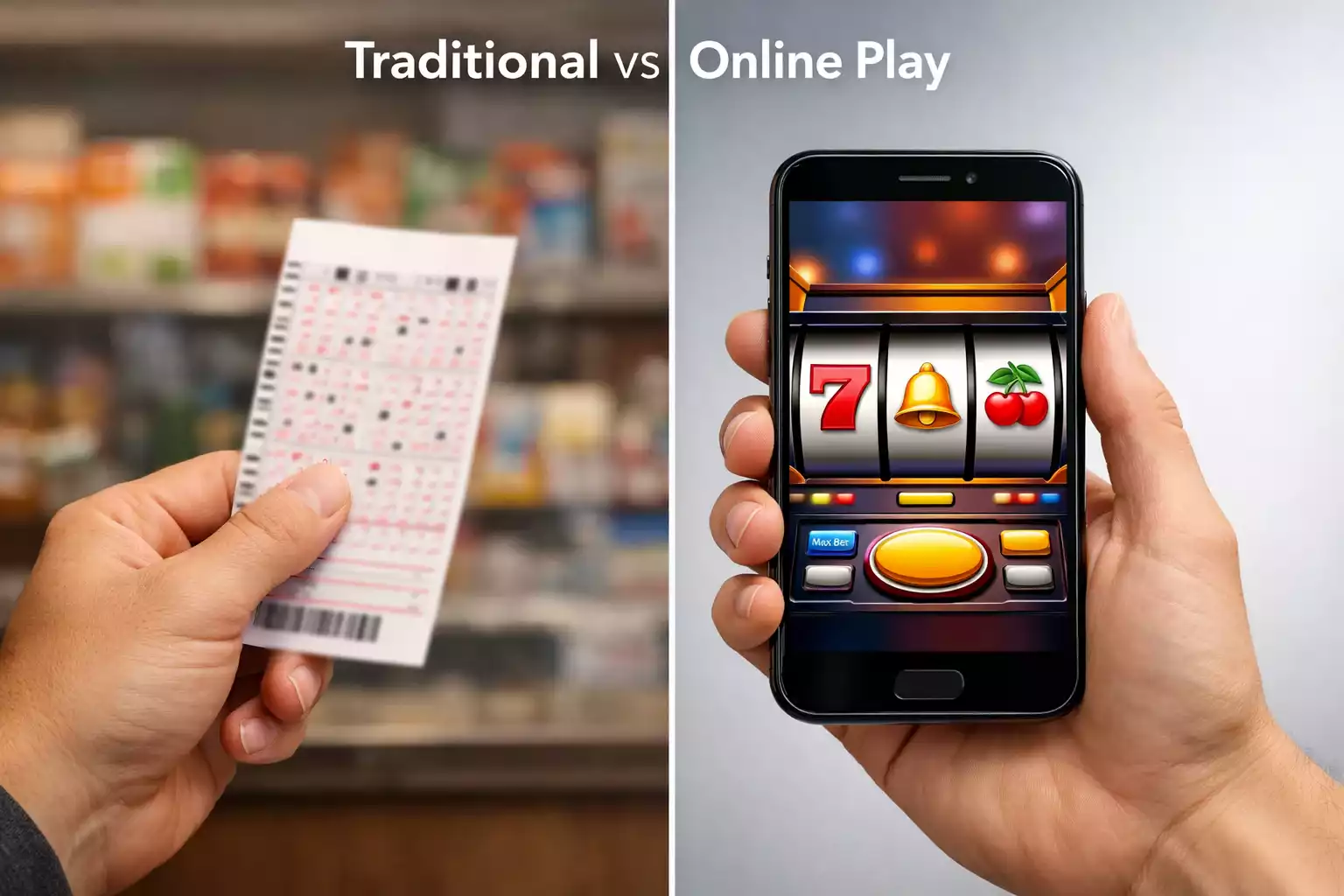
Lottery gameplay is characterized by simplicity and patience. You buy a ticket with preset numbers or choose your own, then wait for a drawing. Scratch tickets offer instant results, but the interaction is brief. You scratch, you see whether you won, and that is the extent of the experience. The entertainment value comes primarily from anticipation and the fantasy of winning big.
Sweepstakes casinos offer a casino-style experience with slots, table games, and sometimes live dealer options. Sessions can last hours rather than seconds. The games themselves look and feel like regulated online casino games because many use software from the same providers. This extended engagement creates a fundamentally different experience. You are not just buying a chance at a prize; you are engaging with entertainment software that happens to include prize opportunities.
The frequency of play also diverges significantly. Most lottery drawings happen once or twice daily at most. Powerball and Mega Millions draw three times per week. Sweepstakes casino games can be played continuously, with spins taking seconds and table game hands resolved in minutes. This higher frequency creates both greater entertainment value for engaged players and greater potential for problematic play patterns. The lottery encourages you to dream between drawings; sweepstakes casinos encourage continuous engagement. Neither approach is inherently superior, but they serve different player preferences and come with different risk profiles.
Odds and Prizes
Lottery odds are famously brutal for jackpot prizes. Your chance of matching all numbers in Powerball sits around 1 in 292 million. State lottery commissions disclose these odds clearly because regulations require it. The tradeoff for those astronomical odds is equally astronomical potential prizes, with jackpots occasionally reaching into billions of dollars. Smaller prizes with better odds exist, but nobody plays Powerball dreaming of matching three numbers.
Sweepstakes casino odds are more opaque and more varied. Individual slot games have return-to-player percentages that typically range from 85% to 97%, meaning the mathematical expectation is negative but less severe than lottery play. However, sweepstakes casinos are not uniformly required to disclose RTP figures or have their games independently audited. Some operators pursue third-party certification voluntarily, while others provide minimal transparency about game odds.
Prize structures also differ considerably. Lotteries concentrate value in rare large jackpots supported by many losing tickets. Sweepstakes casinos distribute value more evenly through frequent smaller wins that keep players engaged. A slot player might win small amounts repeatedly during a session before ultimately losing overall. A lottery player experiences binary outcomes on each ticket. For context on the overall gaming market these activities exist within, the AGA reports that US iGaming alone generated $8.41 billion in gross gaming revenue during 2024. Both activities carry negative expected value for players, but the distribution of wins and losses creates distinctly different experiences.
Which Is Right for You
The choice between lotteries and sweepstakes casinos depends on what you are actually seeking. If you want a simple, quick transaction with a chance at life-changing money and minimal time investment, state lotteries fit that profile. The experience is straightforward, the legal status is unambiguous, and the dream of hitting a massive jackpot drives the appeal.
If you prefer extended entertainment sessions with casino-style gameplay and are comfortable with a more complex regulatory picture, sweepstakes casinos offer that experience. The engagement model more closely resembles traditional casinos, with the added benefit of availability in dozens of states where real-money online gambling remains prohibited. Players should understand, however, that this broader availability exists precisely because the legal status is contested rather than settled.
Consider your own consumption patterns honestly. The continuous availability and frequent small wins of sweepstakes casinos can encourage longer sessions and higher spending than the discrete, time-limited nature of lottery participation. Neither model is designed for players to profit long-term, but they present different behavioral dynamics. Some players find the lottery format easier to budget because the opportunity to play comes and goes with drawing schedules. Others prefer the control of setting their own session limits at sweepstakes casinos. Know your own tendencies before choosing either.
Conclusion
Sweepstakes casinos and state lotteries both offer prize-based entertainment, but the model comparison reveals they are fundamentally different products built on different legal and structural foundations. Lotteries operate with explicit government sanction and contribute directly to state programs. Sweepstakes casinos operate through promotional law interpretations that remain under active legal challenge. The gameplay, odds, and prize structures diverge significantly, serving different player preferences and creating different risk profiles. Understanding these distinctions helps you choose the option that aligns with your entertainment goals and risk tolerance.
See also State Regulatory Actions Against Sweepstakes Casinos.