Every slot spin at a sweepstakes casino comes down to a single question: is this thing actually random? Players dropping money on Gold Coin packages deserve to know whether the digital reels follow predictable patterns or generate outcomes no one can anticipate. The answer lies in random number generators and the certification processes that validate them.
Game fairness at sweepstakes casinos operates in a regulatory gray zone. Unlike licensed iGaming platforms bound by state gambling commissions, sweepstakes operators choose whether to pursue third-party RNG audits. Some invest heavily in certification from recognized testing labs. Others rely on proprietary systems with no external validation. Understanding this distinction separates informed players from those gambling blind on game integrity.
RNG Certification at Sweepstakes Casinos — More on this topic at social casino sweepstakes.
How RNG Works
Random number generators are algorithms that produce sequences of numbers with no discernible pattern. In casino gaming, RNGs determine every outcome: which symbols land on slot reels, which cards get dealt, where the roulette ball stops. The technology runs constantly, generating thousands of numbers per second whether anyone is playing or not.
Modern casino RNGs use pseudorandom number generators seeded with entropy sources like system clock variations, mouse movements, or hardware noise. When you hit spin, the RNG captures whatever number happens to be in the sequence at that precise millisecond. That number maps to a specific outcome through the game’s paytable mathematics. The process happens so fast and with such unpredictability that reverse engineering specific results becomes mathematically impossible.
Two properties matter for game fairness: unpredictability and uniform distribution. Unpredictability means no player or operator can know what number comes next. Uniform distribution means over millions of cycles, each possible outcome appears at its expected frequency. A slot with 95% RTP should return roughly 95 cents per dollar wagered across its lifetime, though individual sessions vary wildly.
Sweepstakes casinos use the same fundamental RNG technology as licensed gambling sites. The algorithms generating outcomes at Chumba Casino work identically to those at legal New Jersey online casinos. What differs is the oversight verifying that the RNG actually performs as advertised.
Certification Bodies
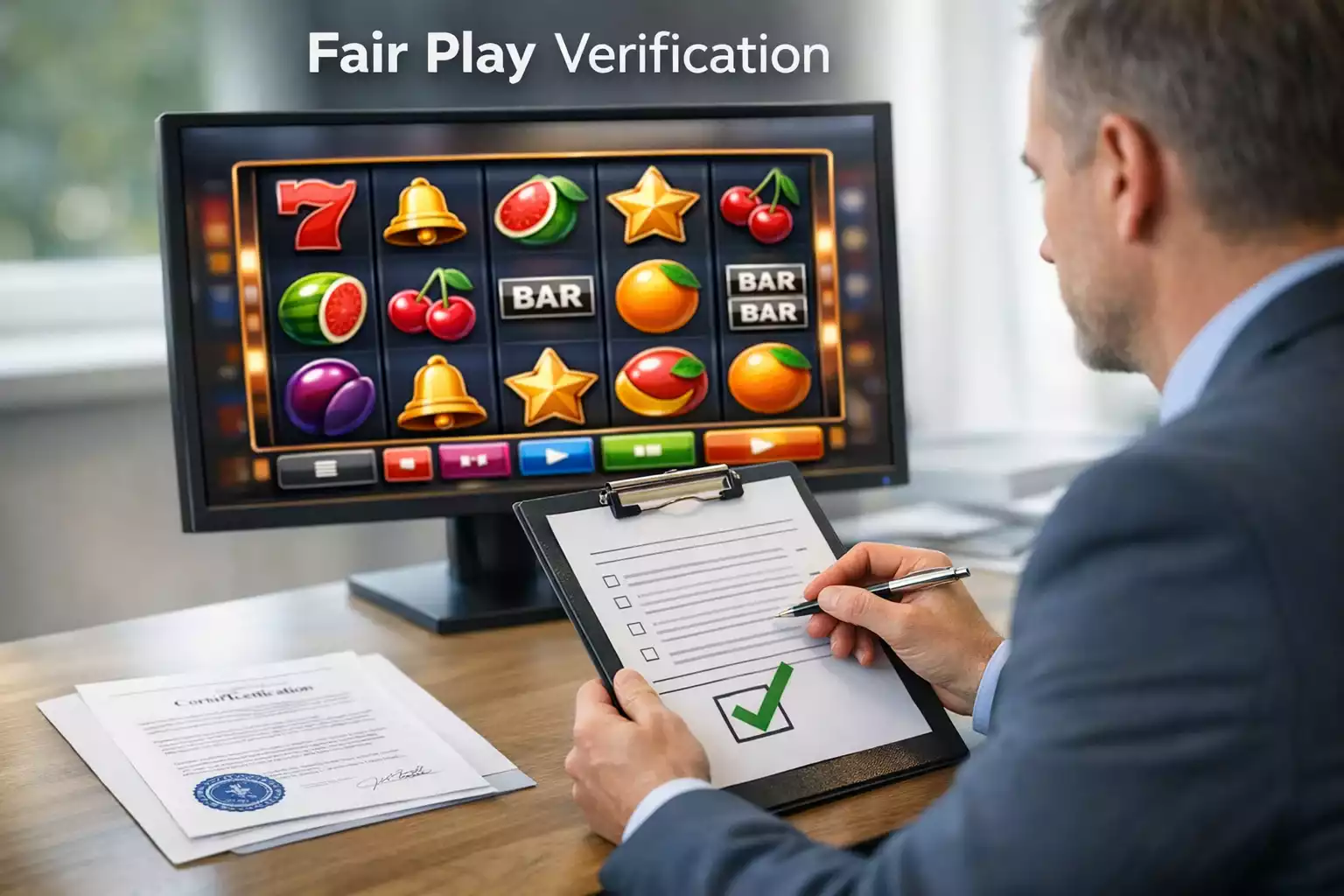
Several independent testing laboratories specialize in casino game certification. Gaming Laboratories International operates as the largest, testing gaming equipment and software for regulators across 710 jurisdictions worldwide. GLI certification involves source code review, mathematical analysis of game outcomes, and ongoing monitoring of live systems. When a game carries GLI approval, it means engineers have verified the RNG produces statistically random results matching the stated return percentages.
iTech Labs provides similar services with particular strength in online gaming. Based in Australia with offices globally, iTech has certified games for major operators in regulated markets throughout Europe, Asia, and North America. Their testing covers RNG evaluation, game mathematics verification, and security assessments of the platforms hosting the games.
BMM Testlabs and eCOGRA round out the major certification providers. BMM focuses heavily on North American markets and maintains accreditation with most US state gaming commissions. eCOGRA gained prominence certifying European online casinos and maintains player protection standards alongside technical testing.
These organizations operate independently from the casinos they test. Revenue comes from testing fees paid by game developers and operators seeking certification, not from the gambling activity itself. The business model depends on maintaining credibility with regulators, creating strong incentive to catch problems rather than rubber-stamp approvals.
Which Operators Are Certified
The major sweepstakes casino operators generally pursue third-party RNG certification despite having no legal requirement to do so. Chumba Casino, the industry’s largest player, uses games tested by independent laboratories. Their parent company VGW holds gaming licenses in Malta and other jurisdictions for separate real-money operations, bringing institutional knowledge of compliance standards to their sweepstakes platform.
Stake.us, backed by the established Stake.com brand, similarly employs certified games from recognized providers. The platform features titles from studios that supply licensed casinos worldwide, inheriting their existing certifications. When a slot from Pragmatic Play or a similar major developer appears on Stake.us, that game has been tested for markets with far stricter oversight requirements.
Pulsz, McLuck, and other prominent sweepstakes sites display certification seals and reference independent testing in their terms of service. The competitive pressure to demonstrate fairness has pushed most serious operators toward some form of third-party validation. Players spending real money on Gold Coin packages expect assurance that games behave honestly.
The catch: certification claims sometimes lack easy verification. Unlike regulated markets where gaming commissions publish licensee information, sweepstakes operators self-report their testing relationships. A site might claim GLI certification without specifying which games were tested or when. Digging into the actual scope of testing often requires contacting operators directly or reviewing detailed terms buried in site documentation.
Limitations Without Licensing
Voluntary certification differs fundamentally from regulatory compliance. When the New Jersey Division of Gaming Enforcement licenses an online casino, that operator faces ongoing monitoring, mandatory audits, and potential license revocation for violations. Sweepstakes casinos pursuing voluntary testing face no equivalent enforcement mechanism. The American Gaming Association has noted that the lack of regulatory oversight presents many risks for consumers as well as the integrity and economic benefits of the legal gaming market.
State regulators have taken notice of this oversight gap. In 2025 alone, over 100 cease-and-desist letters went out from state authorities to sweepstakes operators, according to iGaming Business reporting on regulatory actions. While these enforcement actions focused primarily on the gambling classification rather than game fairness specifically, they illustrate the broader compliance vacuum sweepstakes casinos occupy.
Testing frequency presents another limitation. Licensed casinos undergo continuous monitoring with regulators able to demand audits at any time. Voluntary certification typically happens at fixed intervals, leaving gaps where systems could theoretically be modified between tests. Reputable operators address this through ongoing relationships with testing labs, but nothing mandates such arrangements.
The provably fair model offers an alternative approach some operators have adopted. Using cryptographic verification, provably fair systems let players independently verify that outcomes match seeds generated before bets were placed. This transparency allows real-time fairness checking without relying on third-party certification cycles. However, implementation varies widely and requires technical sophistication many players lack.
How to Verify Fairness
Start with the operator’s terms of service and help documentation. Legitimate sites disclose their testing arrangements, often naming the certification body and providing certificate numbers. Look for specific claims rather than vague fairness promises. A statement like “games tested by GLI for RNG compliance” carries more weight than “we ensure fair gaming.”
Check the game providers themselves. Major studios like NetEnt, Pragmatic Play, and Evolution Gaming maintain certifications for their entire game portfolios. If a sweepstakes casino offers titles from these developers, the games carry inherited fairness validation regardless of the platform hosting them. Developer websites typically list their certification credentials.
Examine stated RTP percentages. Certified games display return-to-player rates verified through mathematical analysis. Sweepstakes casinos should publish these figures either within individual games or in site documentation. Absence of RTP information suggests less transparency around game performance than players should expect.
For provably fair games, test the verification yourself. These systems provide seeds before gameplay and let you check outcomes against those seeds afterward. Tutorial documentation should walk through the process. If an operator claims provably fair technology but makes verification unnecessarily complex, treat the claim skeptically.
Community feedback offers practical verification. Player forums and review sites surface patterns in game behavior. Consistent complaints about specific games or operators warrant caution even if official certifications exist. Conversely, long operational histories without fairness controversies provide circumstantial evidence of legitimate RNG performance.
Conclusion
Game fairness at sweepstakes casinos depends heavily on operator choices rather than regulatory mandates. The major platforms have generally adopted third-party RNG certification to build player confidence, using the same testing laboratories that validate licensed gambling operations. However, the voluntary nature of this compliance means players must verify claims themselves rather than relying on government oversight.
See also Sweepstakes Casino Customer Support.
Look for specific certification details, recognize game providers, and understand the limits of testing that happens outside regulatory frameworks. The RNG technology works identically to licensed casinos. The difference lies entirely in who verifies that technology performs honestly over time.