The question isn’t whether sweepstakes casinos are legal in the United States. The question is which United States you’re asking about. Sweepstakes casino legality varies so dramatically across state lines that a player in Texas can access dozens of platforms while a player in California faces criminal penalties for the same activity. As of 2026, this state-by-state legality patchwork defines everything about how and where Americans can play these platforms.
What looked like a regulatory gray zone in 2024 has become a jurisdictional battleground. State attorneys general issued more than 100 cease-and-desist letters to sweepstakes operators in 2025 alone. California passed an outright ban. New York launched aggressive enforcement. Seven states introduced prohibition bills. The industry that operates in 35-plus states now watches that number shrink.
This guide maps the current legal landscape: where sweepstakes casinos operate freely, where they face restrictions, where they’ve been banned outright, and what legislation might reshape access in the months ahead.
Federal vs State Framework
No federal law explicitly addresses sweepstakes casinos. The Unlawful Internet Gambling Enforcement Act of 2006 targets financial transactions related to online gambling, but sweepstakes operators argue their platforms don’t constitute gambling under federal definitions. The Wire Act applies to sports betting transmissions across state lines. Neither statute was written with dual-currency promotional gaming in mind, leaving sweepstakes casinos in federal regulatory limbo.
This absence of federal guidance means everything depends on state interpretation. Each state’s gambling laws define terms like “consideration,” “prize,” and “chance” differently. Each state’s attorney general can decide whether sweepstakes casinos violate those definitions. Each state’s legislature can pass new statutes targeting the model specifically. The result is fifty separate legal environments, each potentially reaching different conclusions about identical platforms.
State gambling laws generally weren’t written to address online gaming at all, let alone the promotional sweepstakes structure these platforms employ. Most statutes date to eras when gambling meant physical casinos, horse tracks, and lottery tickets. Applying century-old language to apps that give away virtual coins with cash redemption value requires creative interpretation, and that interpretation varies by jurisdiction.
The federal government has shown little appetite for resolving this ambiguity. Congress hasn’t introduced legislation specifically addressing sweepstakes casinos. Federal agencies haven’t issued guidance. The Department of Justice hasn’t brought prosecutions. This vacuum leaves states as the primary battleground, where well-resourced operators face off against attorneys general with varying priorities and interpretations.
For players, the federal vacuum means no baseline protections apply nationwide. What’s accessible from your home depends entirely on where that home sits. Cross a state line, and your legal exposure might change completely, even while using the same platform on the same device.
Interactive State Map
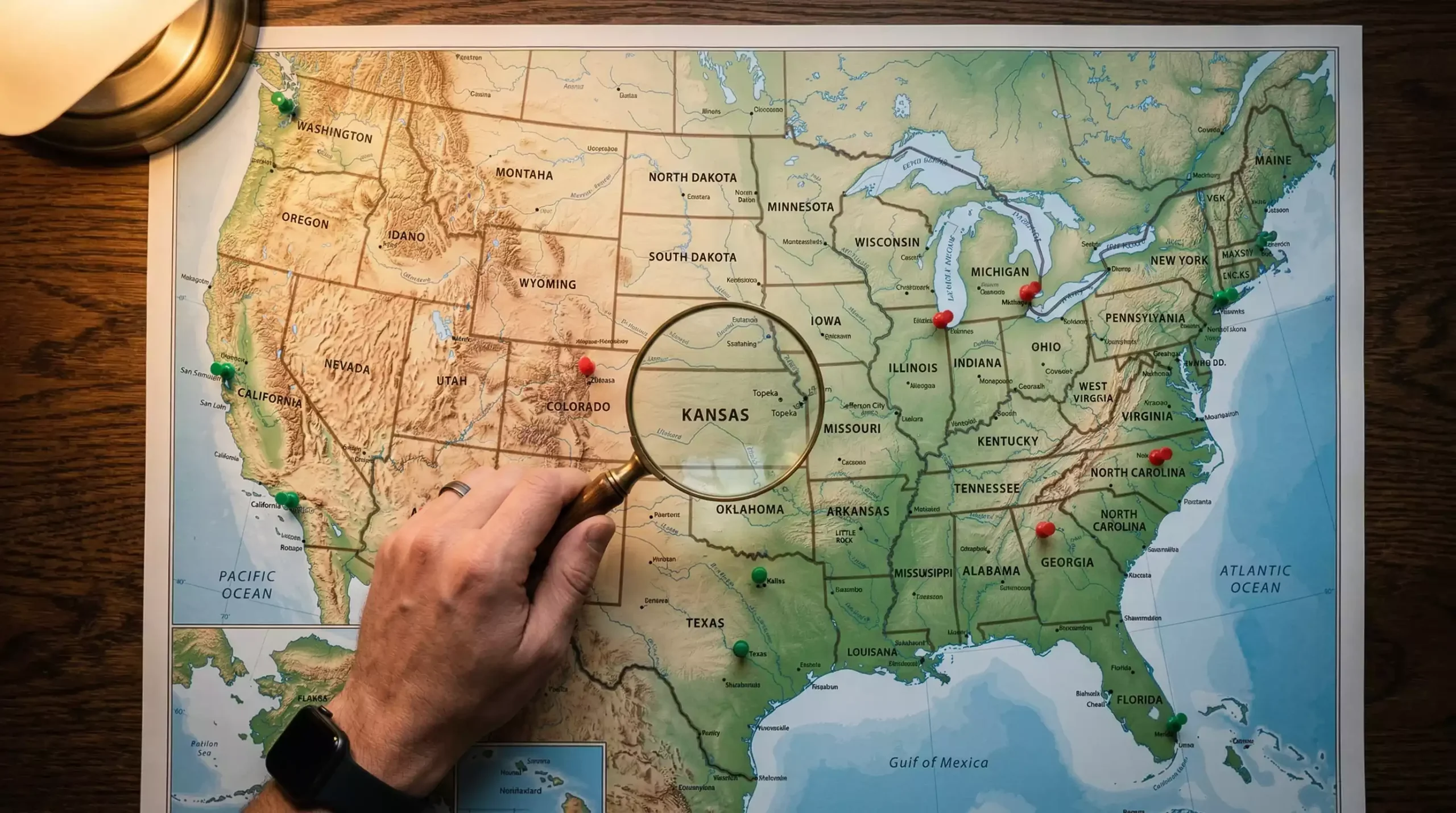
Visualizing sweepstakes casino access requires a color-coded map that reflects the industry’s fragmented legal status. According to KPMG’s Sweepstakes Gaming Emerging Industry Primer, these platforms remain accessible in more than 35 states, while fully legal iGaming operates in just seven: New Jersey, Pennsylvania, Michigan, West Virginia, Delaware, Connecticut, and Rhode Island. That five-to-one ratio explains both the industry’s growth and the regulatory backlash it now provokes.
Green states allow sweepstakes casino access without current enforcement action. Yellow states show active regulatory scrutiny, pending legislation, or recent cease-and-desist activity. Red states have banned sweepstakes casinos outright or enforce existing gambling laws against them. The colors shift frequently. A state coded yellow in January might turn red by summer if legislation passes or an attorney general changes enforcement priorities.
The practical reality: most of America can currently access sweepstakes casinos without immediate legal consequence. The regulatory trajectory suggests that reality may change. Each enforcement action, each new state law, each successful lawsuit shrinks the green zone while expanding the red. Players should treat any map as a snapshot rather than a permanent guide.
Fully Accessible States
The majority of American states currently allow sweepstakes casino access without active enforcement or specific prohibition. These aren’t states that have legalized the model. They’re states that haven’t acted against it. The distinction matters because legal status can shift without warning whenever regulators decide to prioritize enforcement.
Texas represents the largest market where sweepstakes casinos operate freely. With no legal iGaming options and a political environment hostile to traditional gambling expansion, sweepstakes platforms fill substantial demand. The state hasn’t issued enforcement guidance targeting these operators, though existing gambling statutes could theoretically apply if the attorney general chose to act.
Florida presents a more complicated picture. The state accounts for 8.5% of sweepstakes operator revenue, translating to more than $1 billion in player purchases according to an SGLA Economic Impact Report cited by iGaming Business. Tribal gaming interests have lobbied against sweepstakes expansion, viewing these platforms as competitors to their gaming compact monopoly. Legislation targeting sweepstakes casinos appeared in 2025 but didn’t advance. The industry’s substantial Florida presence makes it a perennial target for regulatory attention.
Ohio, Georgia, and Illinois fall into similar categories: large population states without legal iGaming where sweepstakes platforms attract significant player bases. None have launched enforcement campaigns. None have explicitly authorized the model either. Operators continue accepting players while monitoring legislative developments that could change their status.
Pennsylvania presents an interesting case. The state has legal iGaming through its licensed casino industry, yet sweepstakes casinos also operate there. The Pennsylvania Gaming Control Board hasn’t issued enforcement guidance targeting the sweepstakes model, perhaps because licensed operators haven’t lobbied aggressively for restriction. This coexistence contrasts with states like New Jersey, where the established gaming industry pushed hard against unregulated competition.
The common thread across accessible states is often the absence of a powerful commercial casino industry lobbying against unregulated competition. Where traditional casinos dominate, they tend to push for sweepstakes restrictions. Where gambling options remain limited, sweepstakes casinos face less organized opposition. This dynamic explains why some of the most permissive environments exist in states that otherwise restrict gambling.
Players in these states should understand that accessibility doesn’t imply legality. Operating without enforcement isn’t the same as operating with legal blessing. The platforms you access today might block your state tomorrow if regulatory pressure mounts.
Restricted Access States
Between full accessibility and outright bans sits a category of states where sweepstakes casinos face partial restrictions, active regulatory scrutiny, or uncertain legal status that operators interpret cautiously. These jurisdictions present the most complex environment for players trying to understand their options.
Louisiana’s Gaming Control Board issued 40 cease-and-desist letters to unregulated gambling operators, including sweepstakes casinos, in June 2025. This enforcement action didn’t constitute a ban, but it signaled regulatory attention that prompted some operators to withdraw from the state voluntarily. Players in Louisiana may find fewer platform options than those in neighboring Texas, even though neither state has passed sweepstakes-specific legislation.
Minnesota’s Attorney General sent letters to sweepstakes operators warning of potential civil penalties up to $25,000 per violation under existing gambling laws. Some platforms blocked Minnesota access in response. Others continued operating, betting that warnings wouldn’t escalate to prosecution. Players in Minnesota face a fragmented landscape where access depends on individual operator risk tolerance.
States with pending legislation create similar uncertainty. When a bill targeting sweepstakes casinos reaches committee hearings, operators must decide whether to preemptively restrict access or wait for final outcomes. Players in these states might find themselves blocked by cautious operators even before any law passes.
The restricted category also includes states where specific operators face legal action while others continue operating. A cease-and-desist letter to one platform doesn’t necessarily apply to competitors. This selective enforcement creates confusion about which platforms remain safely accessible.
For players in restricted states, the practical advice involves checking multiple platforms rather than assuming uniform availability. Terms of service often list restricted jurisdictions, though these lists may not reflect real-time regulatory developments.
Banned States: Full Details
A growing list of states has moved beyond regulatory warnings to explicit prohibition. These bans take different forms: some states passed new legislation targeting sweepstakes casinos specifically, others interpret existing gambling laws to cover these platforms, and some combine enforcement action with legislative prohibition. Six states enacted outright bans through legislation in 2025—California, Connecticut, Montana, Nevada, New Jersey, and New York. According to Snell & Wilmer Law, seven states ran bills regarding sweepstakes prohibitions in 2025: New Jersey, Mississippi, Maryland, Connecticut, New York, Nevada, and Florida.
Washington State has blocked sweepstakes casinos longer than any other jurisdiction. The state’s gambling laws broadly define “gambling” in ways that capture the sweepstakes model, and the Washington State Gambling Commission has consistently interpreted these laws to prohibit promotional sweepstakes gaming. Major operators have excluded Washington players for years, making it the clearest example of a state where access simply doesn’t exist.
Idaho applies similar logic through its criminal gambling statutes. The state defines gambling to include any scheme where consideration leads to a prize determined by chance, and interprets sweepstakes coin purchases as meeting the consideration element despite the dual-currency structure. Operators avoid Idaho rather than test this interpretation in court.
Nevada’s prohibition reflects different concerns. As the nation’s gambling capital, Nevada maintains strict licensing requirements for any gaming activity. Sweepstakes casinos operate without Nevada gaming licenses, making them illegal by default regardless of how they structure their promotional mechanics. The state that profits most from legal gambling has zero tolerance for unlicensed competition.
Montana became the first state to pass explicit sweepstakes ban legislation, with Senate Bill 555 taking effect October 1, 2025. Connecticut enacted a ban to protect its tribal gaming interests under exclusive compact agreements. New Jersey passed legislation targeting dual-currency sweepstakes platforms, protecting its mature iGaming market from unlicensed competition. Each banned state reaches prohibition through different legal mechanisms, but the outcome remains consistent: these platforms won’t accept players from these jurisdictions, and attempting to circumvent blocks risks both account forfeiture and potential criminal exposure.
The mechanisms of enforcement vary across banned states. Washington employs its gambling commission to monitor compliance and pursue unlicensed operators. California’s new law creates specific penalties for platforms operating in violation of AB 831. Idaho relies on criminal statute interpretation without dedicated enforcement infrastructure for online gaming. These differences matter for operators deciding how to respond, but they matter less for players: blocked is blocked regardless of which agency does the blocking.
Some banned states got there through proactive legislative action. Others reached prohibition through enforcement of general gambling laws. California represents the legislative approach, passing a specific bill. Washington represents the enforcement approach, applying existing broad statutory language. Both paths lead to the same destination, but the legislative path tends to be more permanent since it requires future legislation to reverse.
The list of banned states expands more often than it contracts. No state has moved from prohibition to legalization. The ratchet turns in one direction.
California: AB 831 Impact
California’s sweepstakes casino ban delivered the industry’s most significant blow. The state represents approximately 20% of total sweepstakes casino revenues according to panel discussions at the Global Gaming Expo, as reported by iGaming Business. Losing one-fifth of an industry’s revenue to a single state’s legislative action illustrates both California’s market importance and the fragility of operating in legal gray zones.
Assembly Bill 831 passed both legislative chambers unanimously—36-0 in the Senate and 63-0 in the Assembly. Governor Newsom signed the legislation on October 11, 2025, with the law taking effect January 1, 2026. The bill specifically targets promotional sweepstakes gaming platforms, closing the gap between general gambling prohibitions and the sweepstakes model’s claimed exemptions.
The bill’s unanimous passage reflected unusual coalition politics. California’s tribal gaming interests, which had spent heavily to defeat a sports betting initiative that would have competed with their casinos, viewed sweepstakes platforms as equally threatening competition. The California Nations Indian Gaming Association joined consumer protection advocates and traditional gambling opponents in supporting prohibition. When tribes that benefit from gambling and advocates who oppose gambling agree on legislation, that legislation tends to pass.
For the sweepstakes industry, California’s loss extended beyond immediate revenue impact. The state’s action demonstrated that sweepstakes casinos could be banned through straightforward legislation, providing a template other states might follow. Industry analysts at Eilers & Krejcik Gaming revised their 2026 projections downward specifically because of California’s exit and the likelihood of additional states following.
California players now face the same reality as those in Washington and Idaho: sweepstakes casinos simply don’t operate there. Major platforms blocked California IP addresses and required address verification that excluded California residents. The market that helped build the industry no longer participates in it.
New York: AG Enforcement and Legislative Ban
New York began 2025 with Attorney General enforcement and ended it with legislative prohibition. In summer 2025, AG Letitia James’s office sent cease-and-desist letters to 26 sweepstakes operators, demanding they stop accepting New York players. Governor Kathy Hochul then signed Senate Bill 5935 into law on December 5, 2025, formalizing the ban with immediate effect. The law imposes penalties of $10,000 to $100,000 per violation and grants enforcement authority to the Gaming Commission, Attorney General, and state police.
The financial stakes in New York were substantial. According to research from Eilers & Krejcik Gaming for the Social Gaming Leadership Alliance, New York represented a $762 million market in 2024 sales. The state’s exit represents the second-largest market loss after California, fundamentally reshaping the industry’s geographic footprint.
The attorney general’s legal theory focused on the consideration element of gambling law. While operators claim players don’t pay for the Sweeps Coins used to win prizes, James’s office argued that the practical connection between Gold Coin purchases and Sweeps Coin acquisition satisfies consideration requirements. The subsequent legislation codified this interpretation, explicitly targeting dual-currency systems that allow players to exchange currency for cash or cash equivalents.
Shawn Fluharty, West Virginia Delegate and President of the National Council of Legislators from Gaming States, articulated the regulatory perspective at the organization’s winter conference: “This issue has brought lawmakers together that it represents illegal gambling and revenue theft in many states. Rarely do we agree on anything as lawmakers, but on this issue, we agree that this represents illegal gambling operations.”
New York’s approach combined enforcement action with legislative follow-through. The AG enforcement created immediate pressure that drove operators from the market, while the subsequent legislation ensured permanent prohibition. Most operators, including VGW (Chumba Casino, LuckyLand Slots), withdrew from the state in response to cease-and-desist letters even before the bill was signed.
The state’s action accelerated industry engagement with potential regulatory frameworks, as operators recognized that enforcement would spread to other jurisdictions without proactive lobbying for regulatory alternatives.
2025-2026 Legislative Activity
The legislative landscape for sweepstakes casinos shifted dramatically in 2025, with enforcement and lawmaking efforts intensifying across multiple jurisdictions simultaneously. Beyond the cease-and-desist campaigns targeting individual operators, state legislatures introduced bills that could permanently reshape the industry’s geographic reach.
New Jersey introduced legislation targeting sweepstakes casinos despite already hosting legal iGaming. The state’s commercial casino industry viewed sweepstakes platforms as unlicensed competition operating without the tax burden or regulatory oversight that licensed operators face. Atlantic City casinos contributed to lobbying efforts supporting prohibition, framing the issue as competitive fairness rather than consumer protection.
Mississippi’s legislature considered sweepstakes restrictions driven by Gulf Coast casino interests. The state’s established gaming industry, concentrated in Tunica County and along the coast, faces the same competitive pressure from unregulated platforms that licensed operators confront nationwide. Bills introduced in 2025 sought to clarify that sweepstakes casinos fall under existing gambling prohibitions.
Maryland’s consideration of sweepstakes legislation reflected similar dynamics. The state’s casino revenue supports education funding through dedicated tax allocations. Sweepstakes platforms siphon potential players without contributing to that funding stream, creating both competitive and fiscal arguments for restriction.
Connecticut’s legislative attention stems from tribal gaming interests protected under exclusive compact agreements. The Mashantucket Pequot and Mohegan tribes operate the state’s only casinos and have strong incentives to oppose any gaming expansion that might erode their monopoly position.
Heading into 2026, several states continue developing legislative approaches to sweepstakes gaming. Some propose outright bans modeled on California’s AB 831. Others explore regulatory frameworks that would bring sweepstakes casinos under state oversight with licensing requirements and tax obligations. The industry’s trade association, the Social Gaming Leadership Alliance, has advocated for the regulatory approach, preferring compliance obligations to prohibition.
The pattern across states suggests that doing nothing is no longer a stable equilibrium. States that haven’t addressed sweepstakes casinos face growing pressure from established gaming interests, consumer advocates, and legislators who view the industry’s growth as evidence that current law isn’t working as intended.
Future Outlook
The trajectory of sweepstakes casino regulation points toward continued restriction rather than expansion. Eilers & Krejcik Gaming projects a 10% decline in net revenue for 2026, driven primarily by market exits from California and potential losses in other states moving toward enforcement or prohibition. The 60-70% annual growth rates that characterized the industry’s expansion phase appear unlikely to continue.
Federal action remains possible but uncertain. Congress has shown minimal appetite for gambling legislation generally, and sweepstakes casinos don’t command the lobbying resources that might change that calculus. The Social Gaming Leadership Alliance continues advocating for regulatory frameworks that would establish legal clarity while imposing licensing and tax requirements. Whether any state accepts this compromise remains unclear.
For individual states, the decision framework increasingly centers on revenue. States that ban sweepstakes casinos capture no tax revenue from the activity. States that regulate it could establish tax structures similar to iGaming. The SGLA argues that a 6% tax on player purchases in Florida alone would generate $63 million in state revenue. Whether fiscal arguments outweigh opposition from established gaming interests depends on state-specific political dynamics.
The most likely near-term scenario involves continued state-by-state fragmentation. More states will restrict or ban sweepstakes casinos. Some might establish regulatory frameworks. The patchwork will grow more complex before it simplifies, if it ever simplifies. Players should expect the legal landscape to keep shifting, with accessibility depending on regulatory decisions made in state capitals rather than stable legal doctrine.
Class action litigation adds another variable to the industry’s future. Courts in Kentucky and Washington have already produced significant settlements against social casino and sweepstakes operators. A consistent pattern of plaintiff victories could force operational changes industry-wide, regardless of regulatory outcomes in individual states. Legal risk from private litigation may ultimately matter more than enforcement risk from regulators.
The industry itself may bifurcate. Operators with the resources to pursue licensing might embrace regulatory frameworks where available, gaining legal certainty in exchange for tax and compliance obligations. Smaller operators might consolidate, exit, or continue operating in shrinking geographic footprints where enforcement seems unlikely. What emerges might look quite different from the largely unregulated industry that exists today.
Conclusion
Sweepstakes casino legality in 2026 depends entirely on geography. A player’s access, legal exposure, and platform options vary based on which state they call home. This state-by-state legality framework creates a fragmented landscape where identical activity carries different legal implications across state lines.
The industry that grew to $10 billion in annual sales by operating in legal gray zones now faces systematic regulatory attention. California’s ban, New York’s enforcement, and legislative activity across multiple states signal that the permissive environment of recent years may not persist. Players in currently accessible states should understand that accessibility can change through attorney general action, new legislation, or operator decisions to preemptively withdraw from markets facing regulatory pressure.
Before playing any sweepstakes casino, verify your state’s current status. Check platform terms of service for restricted jurisdictions. Recognize that legal ambiguity cuts both ways: the absence of prosecution today doesn’t guarantee protection tomorrow. The map keeps changing, and staying informed matters more than ever.