The question of where you can legally play casino-style games online in America has two very different answers depending on which model you are asking about. Regulated iGaming, which includes licensed online casinos and poker rooms, operates in a small handful of states under explicit state authorization. Sweepstakes casinos, which use promotional sweepstakes structures to offer similar games, are accessible across a much broader territory. This gap in geographic access explains much of the sweepstakes industry’s growth and shapes the options available to players in most of the country.
Understanding this coverage comparison matters for practical reasons. If you live in New Jersey or Michigan, you have access to fully regulated online casinos competing for your business with substantial player protections in place. If you live in Texas or Florida, sweepstakes casinos may be your only option for online casino-style entertainment. The two markets overlap but serve largely different populations, and the regulatory dynamics of each affect what players can expect in terms of game selection, consumer protection, and long-term availability.
iGaming States vs Sweepstakes Access — More on this topic at social casino sweepstakes.
iGaming Legal States
Regulated online casino gaming currently operates in seven states: New Jersey, Pennsylvania, Michigan, West Virginia, Connecticut, Delaware, and Rhode Island. These states have passed specific legislation authorizing online gambling, established licensing frameworks, and created regulatory bodies to oversee operations. Nevada technically allows online poker but not full casino gaming, existing in a middle ground that does not quite fit either category.
The legal iGaming market generated $8.41 billion in gross gaming revenue during 2024, according to the American Gaming Association, representing a 28.7% increase over the previous year. This substantial revenue from just seven states demonstrates the concentrated value of regulated markets. New Jersey and Pennsylvania alone account for the majority of iGaming revenue, with their mature markets supporting dozens of licensed operators.
Each iGaming state maintains its own licensing requirements, tax structures, and consumer protection frameworks. Operators must obtain state-specific licenses, submit to regular audits, implement responsible gambling tools, and maintain segregated player funds. These requirements create significant barriers to entry but also provide players with robust protections. When something goes wrong at a licensed online casino, players have clear regulatory channels for complaints and dispute resolution.
Expansion of regulated iGaming has proceeded slowly despite industry lobbying. Multiple states consider legalization bills each legislative session, but few progress to passage. Political opposition comes from various sources including tribal gaming interests concerned about competition, lottery operators protecting their market position, and legislators skeptical of gambling expansion. Most industry observers expect gradual expansion rather than rapid nationwide legalization.
Sweepstakes Availability
Sweepstakes casinos operate in more than 35 states, creating geographic access that dwarfs the regulated iGaming footprint. This broad availability exists precisely because sweepstakes platforms do not seek gambling licenses, instead claiming that their promotional sweepstakes model falls outside gambling regulation entirely. The legal theory underlying this approach remains contested, but it has enabled rapid market expansion while the debate continues.
The states where sweepstakes casinos are unavailable include Washington, which has specifically banned the activity through statutory language, and Idaho, which takes a restrictive interpretation of its gambling laws. More recently, California passed legislation explicitly banning sweepstakes casinos effective late 2025, and New York has taken aggressive enforcement action that effectively excludes the state even without formal legislative prohibition. Montana and Nevada also restrict sweepstakes casino access through various legal mechanisms.
This availability picture continues shifting as states take enforcement positions. States that previously allowed sweepstakes operations by default are reconsidering, while others continue permitting access without explicit authorization. The geographic access advantage that sweepstakes casinos hold over regulated iGaming exists in tension with the legal uncertainty that makes that access possible. Each new state restriction narrows the gap, though the fundamental disparity between accessible states versus regulated markets remains substantial.
Coverage Comparison Map
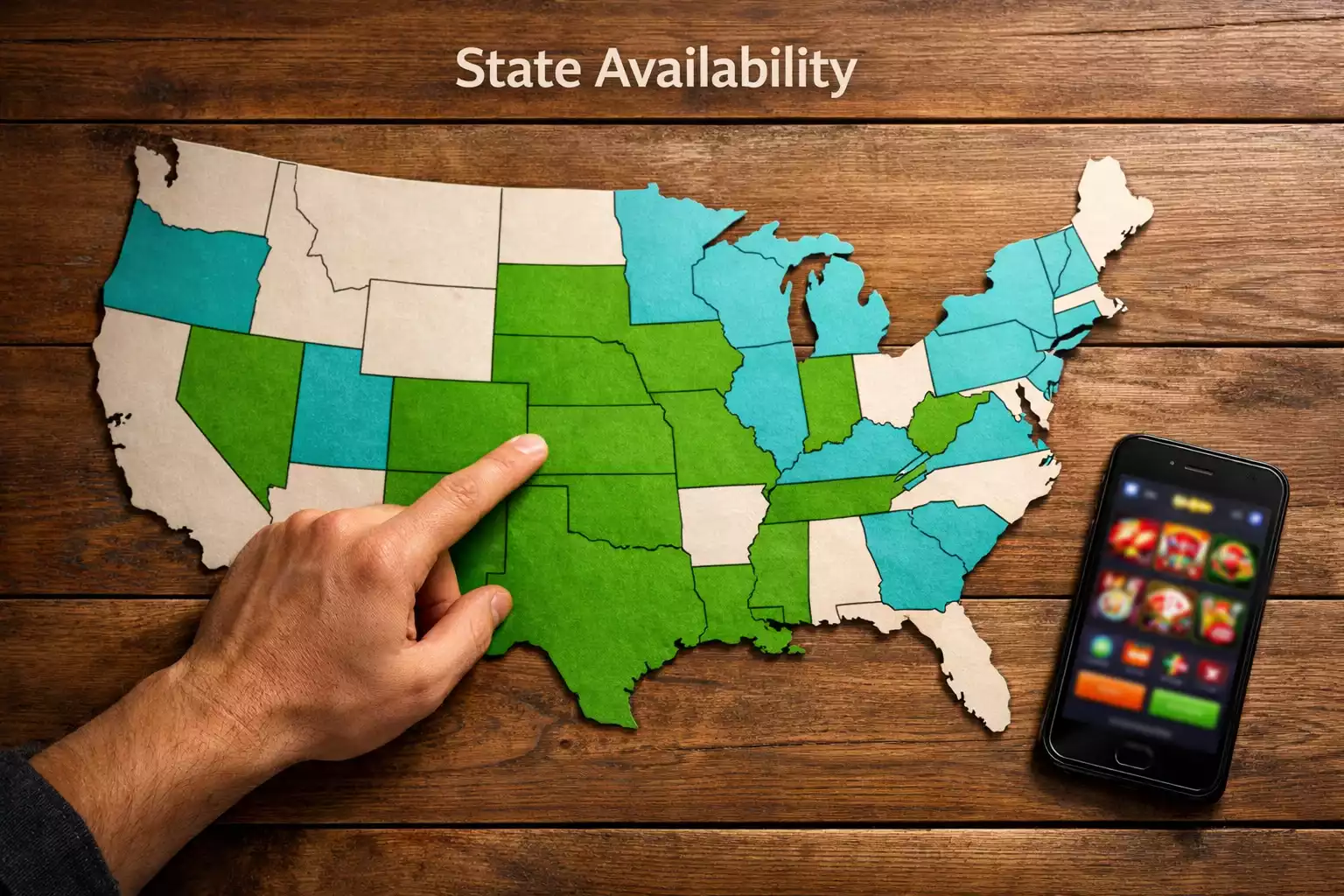
Visualizing the coverage comparison reveals distinct geographic patterns. Regulated iGaming clusters in the Northeast, with New Jersey, Pennsylvania, Delaware, Connecticut, and Rhode Island forming a contiguous block of legal states. Michigan and West Virginia represent the Midwest and Appalachian extensions of legal iGaming. The South, Southwest, and most of the West remain without regulated online casino options.
Sweepstakes availability essentially inverts this pattern of scarcity. Players in Texas, Florida, Ohio, and Illinois have no legal iGaming option but generally can access sweepstakes platforms. The practical effect is that sweepstakes casinos serve as the de facto online casino option for players in states representing the majority of the US population. This geographic access reality explains the industry’s rapid growth despite operating in regulatory gray areas.
Henry Williams, Executive Director of the Michigan Gaming Control Board, has noted: “Gambling regulations are in place for a reason, and illegal gambling operations are not welcome in Michigan.” This sentiment from regulated states highlights the tension between jurisdictions that have built licensing frameworks and those where sweepstakes casinos operate without such oversight. The coverage map changes regularly as states take enforcement action or pass new legislation, generally by restricting sweepstakes access rather than expanding regulated alternatives.
Why the Gap Exists
The massive disparity between iGaming availability and sweepstakes access stems from fundamentally different market entry strategies. Regulated iGaming requires affirmative state action: legislation must pass, regulations must be written, licensing frameworks must be established, and operators must apply for and receive approval. This process typically takes years from initial bill introduction to operational launch. Political opposition at any stage can derail legalization entirely.
Sweepstakes casinos reversed this approach. Rather than seeking permission, operators launched services claiming their model did not require gambling authorization. The burden shifted to states to affirmatively prohibit the activity if they objected. Many states lacked specific statutory language addressing the sweepstakes model, and enforcement resources were limited. The result was rapid market entry across most of the country while legislators and regulators considered how to respond.
Economic incentives reinforced this gap. Traditional gambling interests supported slow iGaming expansion to protect land-based operations. State lotteries resisted online competition. Tribal gaming compacts created complex political dynamics in many states. These same interests now advocate against sweepstakes casinos, but the industry established market presence while opposition organized. The geographic access gap persists because closing it requires either expanding regulated iGaming, which faces substantial political barriers, or restricting sweepstakes access, which proceeds one state at a time.
Choosing Based on Location
Your state of residence largely determines your options. If you live in New Jersey, Pennsylvania, Michigan, West Virginia, Connecticut, Delaware, or Rhode Island, you have access to licensed online casinos that operate under regulatory oversight. These platforms offer established player protections, verified game fairness, and legal recourse if disputes arise. The tradeoff is that only operators holding state licenses can serve you, limiting choices compared to the broader sweepstakes market.
If you live elsewhere and sweepstakes casinos are accessible in your state, that represents your primary option for online casino-style games. The games may look similar to regulated offerings, but the consumer protection framework differs substantially. No state gaming commission oversees operations. Dispute resolution depends on the operator’s internal processes. Game fairness certification is voluntary rather than mandatory. These differences matter if something goes wrong.
Players in states where both options theoretically exist face an interesting choice. Regulated casinos offer more robust protections and potentially superior game selection from major software providers. Sweepstakes casinos may offer different promotional structures and games not available through licensed operators. Geographic access considerations disappear when both markets are available, leaving the choice to individual preference about which model better serves your entertainment needs and risk tolerance.
Conclusion
The geographic access gap between regulated iGaming and sweepstakes casinos remains substantial in 2026. Seven states offer legal online casino gaming while sweepstakes platforms remain accessible in more than 35 states. This coverage comparison reflects different regulatory approaches and market entry strategies rather than different player demand. The gap shapes the online gaming landscape for most Americans, making sweepstakes casinos the only casino-style option available in most of the country. Whether that gap narrows through iGaming expansion or sweepstakes restriction will determine the future structure of the American online gaming market.
See also The Future of Sweepstakes Casinos.