Florida represents one of the most significant markets for sweepstakes casinos—and one of the most politically complex. The Sunshine State accounts for approximately 8.5% of sweepstakes operator revenue, translating to more than $1 billion in player purchases during 2025. That market scale attracts operator attention while simultaneously drawing scrutiny from Florida’s powerful tribal gaming interests and state regulators.
Florida access to sweepstakes casinos currently remains available, unlike neighboring states that have implemented restrictions. But the political landscape that protects tribal gaming exclusivity creates ongoing uncertainty. Understanding Florida’s current status—what’s available, what influences future policy, and what players should anticipate—helps Florida residents make informed choices about sweepstakes casino participation.
Sweepstakes Casinos in Florida — More on this topic at social casino sweepstakes.
Current Legal Status
Sweepstakes casinos currently operate in Florida without explicit prohibition or regulation. The state hasn’t enacted legislation specifically targeting sweepstakes gaming, nor has the Attorney General launched enforcement campaigns like those in New York. This absence of action allows sweepstakes operators to serve Florida residents under the same promotional sweepstakes framework they use nationally.
Florida law addresses gambling through statutes that predate the sweepstakes casino model. Traditional gambling prohibitions exist, but whether they apply to platforms operating as promotional contests rather than licensed gambling remains legally untested in Florida courts. Operators argue their sweepstakes structure places them outside gambling regulation; state authorities haven’t formally agreed or disagreed.
The lack of explicit authorization creates ambiguity rather than certainty. Florida hasn’t blessed the sweepstakes model—it simply hasn’t prosecuted it. This distinction matters because regulatory posture can shift. What authorities tolerate today they might challenge tomorrow, particularly if political dynamics change.
No Florida-specific licensing or consumer protection requirements apply to sweepstakes operators. Unlike states with regulated iGaming, Florida imposes no responsible gambling requirements, problem gambling funding, or oversight mechanisms on sweepstakes platforms. Players operate in an unregulated environment where operator practices vary based on company policy rather than state mandate.
The current status benefits players seeking sweepstakes access while exposing them to whatever risks accompany unregulated gaming. It’s legal in the sense that no one is prosecuting it—not legal in the sense of affirmative state authorization.
Florida’s Gaming Landscape
Florida’s legal gaming options create context for understanding sweepstakes casinos’ role in the state’s gambling ecosystem.
Tribal casinos dominate Florida’s casino gaming. The Seminole Tribe operates seven casinos, including the massive Seminole Hard Rock properties in Hollywood and Tampa. These facilities offer slots, table games, poker, and sports betting under the 2021 gaming compact with the state. The Seminole gaming compact grants the tribe exclusive rights to most casino gaming in Florida.
Pari-mutuel facilities offer limited gaming. Horse tracks, dog tracks (grandfathered before the 2018 ban on greyhound racing), and jai-alai frontons operate card rooms and some electronic gaming under state licenses. These facilities provide legal gambling alternatives outside the tribal system, though with more limited game selections than tribal casinos.
Sports betting arrived through the Seminole compact but faced legal challenges. Mobile sports betting launched in 2021, then was halted by federal court decisions. The status of legal sports betting in Florida remains unsettled, with litigation ongoing and the Seminole Tribe’s exclusive rights under dispute.
No regulated online casino gaming exists in Florida. Unlike states where licensed operators offer legal online slots and table games, Florida has no iGaming framework. This gap creates the market opportunity sweepstakes casinos fill—online casino-style gaming unavailable through regulated channels.
Lottery and scratch games operate statewide under state authorization. These don’t directly compete with sweepstakes casinos but establish that Floridians participate actively in legal chance-based gaming.
Tribal Gaming Interests
The Seminole Tribe’s gaming compact with Florida creates both legal framework and political dynamics that affect sweepstakes casinos’ future in the state.
The 2021 compact grants the Seminole Tribe exclusive rights to most casino gaming, including slots and sports betting. The tribe pays the state hundreds of millions annually for these exclusivity rights. Sweepstakes casinos operating outside this framework—offering slot-like games without tribal agreements or state revenue sharing—potentially undermine the compact’s value to both the tribe and the state.
Tribal political influence in Tallahassee runs deep. The Seminole Tribe is among Florida’s most significant political donors, supporting candidates and causes aligned with tribal interests. When California banned sweepstakes casinos, tribal gaming interests drove the unanimous legislative support. Similar dynamics could emerge in Florida if the tribe prioritizes sweepstakes prohibition.
So far, the Seminole Tribe hasn’t made sweepstakes casinos a visible political priority in Florida. This restraint may reflect strategic choice, capacity limits, or assessment that sweepstakes casinos don’t yet threaten tribal revenue significantly enough to warrant political capital expenditure. Industry estimates suggest sweepstakes platforms could generate $63 million in state tax revenue if regulated at a 6% rate on player purchases—revenue that currently flows neither to the state nor to tribal competitors.
Tribal positions can shift. If sweepstakes casino revenue grows, if tribal casino revenue declines, or if the tribe decides to pursue sweepstakes restriction as part of broader gaming policy goals, Florida’s political landscape could change quickly. Players enjoying Florida access should recognize that tribal interests represent the most significant potential catalyst for restriction.
Available Operators
Florida residents currently access the full range of major sweepstakes casinos without state-specific restrictions. All operators serving US players nationally typically serve Florida as well.
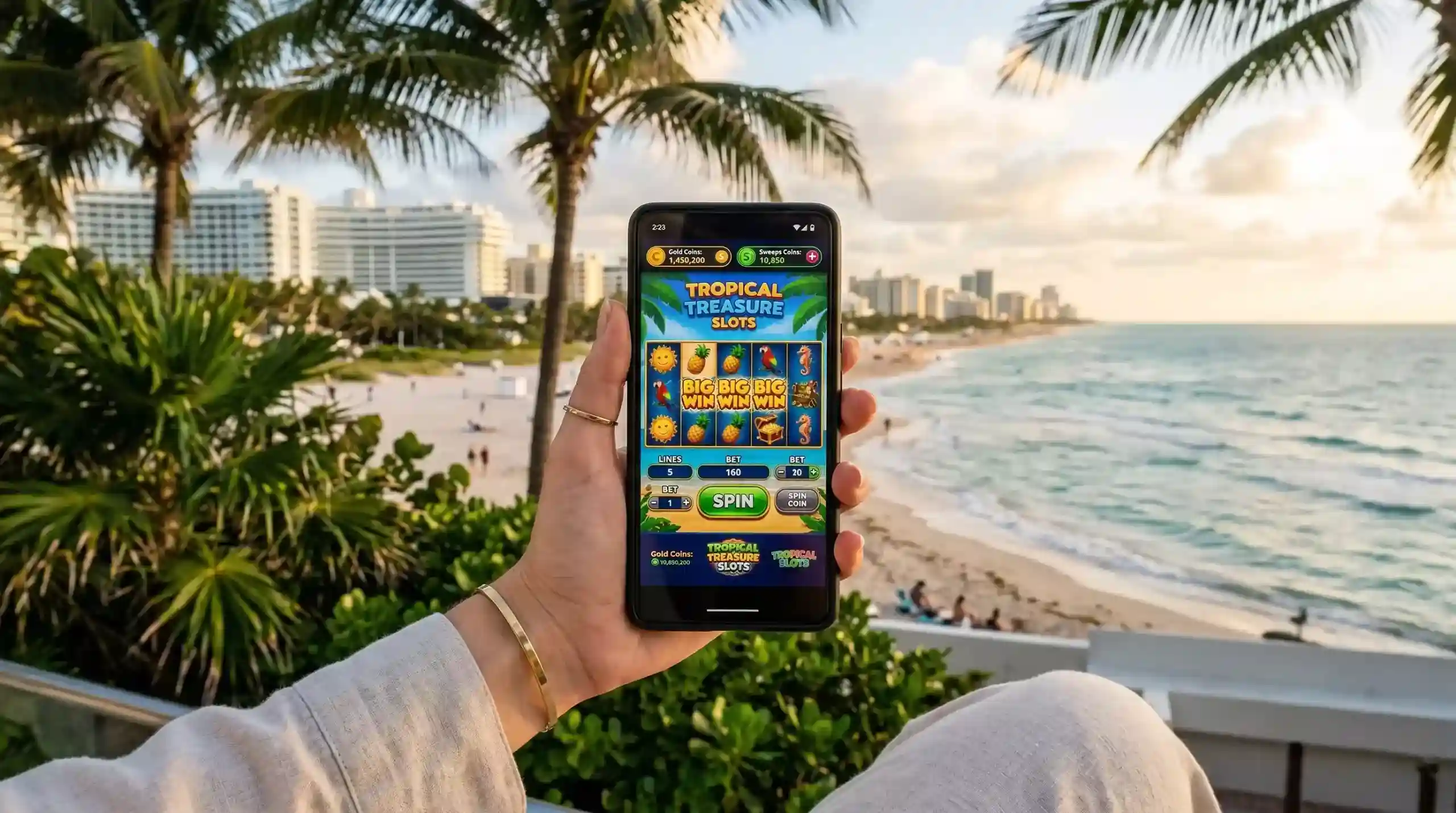
Chumba Casino operates in Florida with its standard offerings—slot games, table games, and daily login bonuses. Florida players register, verify accounts, purchase Gold Coins, and redeem Sweeps Coins through the same processes available elsewhere.
Stake.us accepts Florida players for its crypto-focused sweepstakes platform. The cryptocurrency integration that distinguishes Stake.us from competitors functions normally for Florida residents, including both crypto purchases and crypto redemptions.
Pulsz, WOW Vegas, LuckyLand Slots, and other established operators all serve Florida without special limitations. Game selections, bonus structures, and redemption processes match what’s available nationally.
Newer operators entering the market also typically include Florida in their service areas. The state’s market size makes it attractive to new platforms seeking to build player bases quickly.
Payment processing works normally for Florida players. Credit cards, debit cards, PayPal, and where accepted, cryptocurrency all function for Gold Coin purchases. Redemptions process through standard channels—bank transfers, PayPal, or crypto depending on operator and player preference.
No Florida-specific bonuses or restrictions currently differentiate Florida play from other states. Operators treat Florida as part of their general US market rather than requiring state-specific adaptations.
2026 Outlook
Florida’s sweepstakes casino landscape entering 2026 appears stable but faces identifiable risks that could change access.
No imminent legislative action threatens sweepstakes casinos in Florida. No bills prohibiting sweepstakes gaming advanced significantly in recent sessions. The Attorney General hasn’t signaled enforcement interest comparable to New York’s campaign. For the immediate future, Florida access likely continues.
Tribal dynamics bear monitoring. The Seminole Tribe’s priorities and political activity provide the clearest signal of potential change. Increased tribal lobbying against sweepstakes casinos, campaign contributions to candidates supporting restrictions, or formal compact renegotiations addressing sweepstakes gaming would all suggest shifting winds.
National trends influence local outcomes. As more states restrict sweepstakes casinos—California’s ban, New York’s enforcement, potential actions elsewhere—the policy momentum could affect Florida legislative considerations. States often follow each other’s examples on emerging regulatory questions.
Regulatory frameworks remain possible alternatives to prohibition. If Florida chose to regulate rather than ban sweepstakes casinos, players might face new requirements but retain access. The industry’s own lobbying emphasizes regulatory willingness, hoping to channel state interest toward licensing rather than prohibition.
For Florida players, the practical guidance: enjoy current access while maintaining awareness that it could change. Don’t accumulate large unredeemed balances that might become complicated if restrictions emerge unexpectedly. Stay informed about Florida gaming policy developments that might signal directional changes.
Conclusion
Florida access to sweepstakes casinos currently stands unrestricted, making the state one of the more favorable jurisdictions for players interested in these platforms. All major operators serve Florida; payment processing functions normally; no enforcement campaigns threaten immediate access.
See also Sweepstakes Casinos in Texas.
The stability isn’t guaranteed. Tribal gaming interests that drove California’s unanimous prohibition exist in Florida too. The Seminole Tribe’s political influence could catalyze restrictions if tribal priorities shift. National regulatory momentum against sweepstakes casinos might eventually reach Florida.
For now, Florida players can participate in sweepstakes casinos with the same access available to most US residents. Enjoying that access while remaining aware of the political dynamics that could change it represents the informed approach to Florida sweepstakes gaming in 2026.