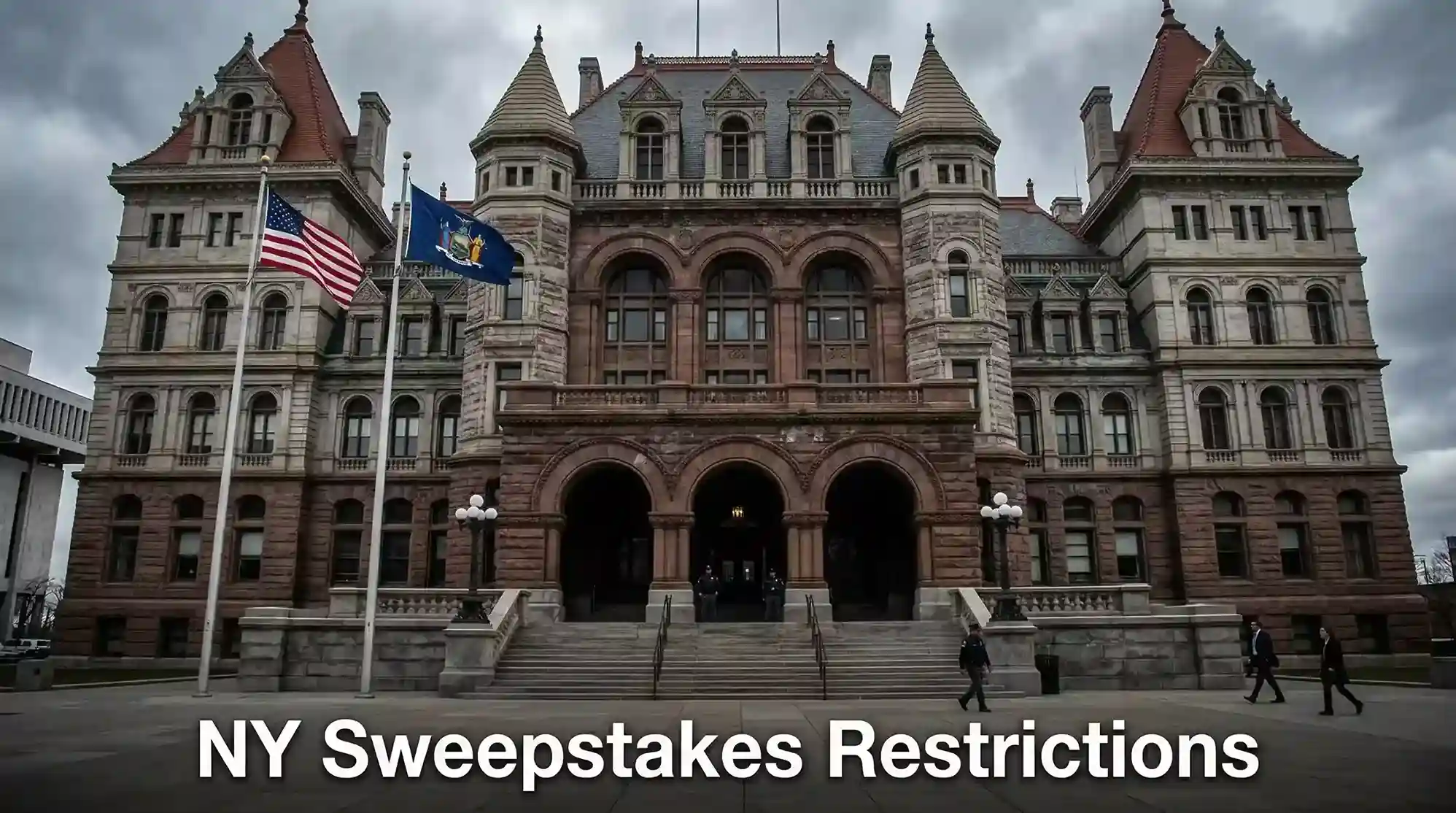
New York Attorney General Letitia James made sweepstakes casinos an enforcement priority in 2025, sending cease-and-desist letters to operators and signaling that the state views these platforms as illegal gambling operations. Unlike California’s legislative ban, New York’s approach relies on existing law enforcement rather than new legislation—a distinction that creates both uncertainty and opportunity for the industry.
New York represents significant market value. The state generated approximately $762 million in sweepstakes casino sales during 2024, making it one of the largest state markets. NY enforcement actions threaten substantial revenue while setting precedents that other states’ attorneys general may follow.
New York Sweepstakes Casino Restrictions — More on this topic at social casino sweepstakes.
NY AG Actions Explained
Attorney General Letitia James sent cease-and-desist letters to 26 sweepstakes casino operators during summer 2025, demanding they stop serving New York residents. The letters characterized sweepstakes casinos as illegal gambling operations under New York law and threatened enforcement action against operators who continued serving the state.
The AG’s approach differed from California’s legislative ban. Rather than seeking new law, James relied on her interpretation of existing New York gambling statutes. Her office argues that sweepstakes casinos constitute illegal gambling regardless of their promotional framing—that the sweepstakes model is simply a legal fiction designed to evade gambling law.
Cease-and-desist letters don’t carry immediate legal force like court orders. They represent the AG’s position and warning of potential prosecution, but operators technically could continue operations while challenging the legal interpretation. In practice, most operators take AG warnings seriously—the risk of criminal prosecution and civil penalties typically outweighs continued market access.
The 26 targeted operators represented most major sweepstakes casinos serving New York. Chumba Casino, Pulsz, Stake.us, WOW Vegas, and others all received letters. The comprehensive targeting suggested coordinated enforcement rather than selective prosecution of individual bad actors.
Following the letters, some operators voluntarily withdrew from New York while others continued operations, apparently willing to test the AG’s enforcement appetite. The mixed response created uncertainty for New York players about which platforms remained accessible and for how long.
Legal Basis for Enforcement
New York’s gambling laws prohibit unlicensed gambling operations within the state. The AG’s position relies on interpreting sweepstakes casinos as gambling despite their promotional structure—essentially arguing that calling something a sweepstakes doesn’t make it not gambling if it functions like gambling.
The legal argument focuses on the three traditional elements of gambling: consideration (something of value wagered), chance (random outcome determination), and prize (something of value won). Sweepstakes casinos claim to eliminate “consideration” through free entry methods, but the AG’s office argues that practical reality—most players purchase rather than use free alternatives—demonstrates that consideration exists.
Bill Miller of the American Gaming Association has characterized sweepstakes operators as using “legal acrobatics to avoid calling themselves betting or gambling, only then to offer products that most universally would agree are gambling.” This framing aligns with the NY AG’s enforcement theory: that the sweepstakes model is legal wordplay rather than substantive compliance with gambling law.
New York’s constitutional framework reserves gambling authority to the state. Commercial casinos, tribal gaming, lottery operations, and horse racing all operate under specific legal authorization. Sweepstakes casinos claim no such authorization, relying instead on the argument that they’re not gambling at all. The AG rejects this argument.
The enforcement approach hasn’t been tested in New York courts. Whether judges would agree with the AG’s interpretation remains uncertain. Operators facing prosecution could challenge the legal theory, potentially winning rulings that sweepstakes models do comply with New York law. But litigation is expensive, outcomes are uncertain, and criminal exposure creates risk that many operators prefer to avoid.
Which Operators Are Affected
The AG’s letters targeted major sweepstakes casino operators, though responses varied significantly across the industry.
VGW-operated platforms—Chumba Casino and LuckyLand Slots—received letters and faced decisions about New York market access. These platforms had substantial New York player bases given their market-leading positions. Their response to AG pressure affected significant numbers of New York players.
Pulsz, Stake.us, WOW Vegas, and other prominent operators also received cease-and-desist correspondence. Each operator made independent decisions about continued New York operations, creating a fragmented landscape where some platforms withdrew while others remained accessible.
Smaller operators faced similar pressure with fewer resources to evaluate legal exposure. Some immediately withdrew from New York rather than risk prosecution; others apparently continued operations, perhaps calculating that enforcement resources would focus on larger targets first.
The situation remains fluid. Operators that initially remained in New York may later withdraw if enforcement intensifies. Those that withdrew might return if enforcement proves ineffective or if legal challenges succeed. Players cannot assume current access reflects permanent availability.
New market entrants face heightened uncertainty about New York. Launching a sweepstakes casino with known AG opposition creates immediate legal exposure. New operators may simply exclude New York from launch, avoiding the state entirely rather than testing enforcement limits.
Current Player Status
New York players face an uncertain environment where some sweepstakes casinos remain accessible while others have withdrawn. The practical situation depends on individual operator decisions rather than clear legal prohibition.
Players at platforms that withdrew from New York should have received notifications about account closure and redemption deadlines. Accumulated Sweeps Coins balances typically require redemption within specified timeframes before accounts close. Players who missed deadlines may have limited recourse for recovering balances.
Players at platforms still serving New York operate in legal gray zones. The AG has declared these operations illegal, but enforcement against individual players seems unlikely—prosecution resources focus on operators rather than users. Still, playing at platforms under active AG scrutiny creates uncertainty about future access and redemption ability.
Account verification may become complicated. Operators concerned about NY enforcement might implement stricter location verification, making VPN use or location spoofing more difficult. Players attempting to circumvent geographic restrictions risk account closure and balance forfeiture.
Redemption timing matters more than usual. Players with significant balances at NY-accessible platforms might consider redeeming sooner rather than accumulating larger amounts that become inaccessible if operators suddenly withdraw. The uncertainty favors smaller balances and regular redemptions over large accumulations.
Outlook for NY Players
The NY enforcement trajectory remains uncertain, with multiple possible outcomes depending on AG follow-through, operator responses, and potential legislative action.
Escalated enforcement could eliminate sweepstakes casinos from New York entirely. If the AG pursues prosecutions against operators who ignored cease-and-desist letters, remaining platforms would likely withdraw rather than face criminal exposure. This scenario would mirror California’s outcome through enforcement rather than legislation.
Enforcement stagnation might allow continued operations. If the AG’s office doesn’t follow through with prosecutions, operators may continue serving New York despite the letters. Resource constraints, litigation risk, or changing priorities could all limit enforcement action. In this scenario, sweepstakes access persists in legal limbo—technically prohibited according to the AG but practically available.
Legislative clarification could resolve uncertainty either direction. New York lawmakers might follow California’s example and pass explicit prohibition, removing legal ambiguity and forcing industry exit. Alternatively, the state could create a licensing framework that legitimizes sweepstakes casinos under state oversight—an outcome the industry would welcome but that faces significant political obstacles.
Industry estimates suggest New York’s loss of sweepstakes casinos could cost $230 million annually in potential economic activity. Whether this figure influences state policy decisions remains to be seen. Licensed gambling interests that benefit from sweepstakes elimination may carry more political weight than economic arguments for market access.
For individual players, the practical advice remains consistent: stay informed about operator status, don’t maintain large unredeemed balances, and recognize that access could change quickly depending on enforcement developments.
Conclusion
NY enforcement represents a different approach than California’s legislative ban but potentially achieves similar results. Attorney General Letitia James has made clear that her office views sweepstakes casinos as illegal gambling, and the 26 cease-and-desist letters sent in 2025 signaled serious enforcement intent.
See also Sweepstakes Casinos in Florida.
The current situation remains fluid. Some operators withdrew from New York; others continue operations. Whether the AG escalates enforcement or enforcement stagnates will determine the practical outcome for New York players. Legislative action could clarify the situation in either direction.
New York players should approach sweepstakes casino access cautiously, recognizing that platforms currently available may withdraw with limited notice. Regular redemptions, attention to operator communications, and awareness of enforcement developments help manage the uncertainty that defines the current New York landscape.